
Tackling a full property overhaul can feel like staring down a mountain of decisions, contractors, and invoices all at once. Between the house itself, the yard, and everything in between, costs can spiral fast if you do not have a clear plan before the first hammer swings. The good news is that a whole-property renovation does not have to mean choking on debt or cutting corners that cost you more later. With the right sequencing, research, and a few smart money-saving strategies, you can modernize your home inside and out while keeping your budget firmly in control.
Setting Priorities Before You Start Demolition
Before any work begins, walk your property and make two lists: must-fix items and nice-to-have upgrades. Must-fix items are things like a failing roof, outdated electrical panels, or a water heater that is on its last leg, while nice-to-have items are cosmetic changes you could delay if money gets tight. Ranking projects this way prevents the common mistake of spending your entire budget on a beautiful kitchen while the furnace is one winter away from failure.
It also helps to separate indoor and outdoor priorities since they often pull from the same budget pool but have very different urgency levels. A cracked driveway can wait a season, but a safety hazard like a broken deck railing cannot. Writing everything down early gives you a realistic picture of total project scope before you start requesting quotes.
Budgeting for Interior Systems and Comfort Upgrades

Interior systems rarely get the attention they deserve until something breaks, but they should be near the top of any overhaul budget. Pipes, ductwork, and wiring are the bones of your home, and tackling them after the cosmetic work is finished almost always costs more in the long run. If your water heater is more than ten years old or showing signs of rust and inconsistent temperatures, scheduling water heater repair before you finish your walls and flooring can save you from tearing out fresh work later if a leak develops. A standard tank unit typically lasts eight to twelve years, so check the manufacture date on the label and budget $150 to $500 for repairs, or closer to $1,200 to $2,500 if a full replacement turns out to be the smarter move. The same logic applies to heating and cooling, since comfort problems tend to get worse, not better, with time. An HVAC system nearing fifteen to twenty years old is a prime candidate for inspection before you close up walls, because adding insulation or running new ductwork is far easier when the framing is still open. It also pays to have an electrician check your panel capacity early on, especially if you’re adding central air, a tankless water heater, or other high-draw appliances. Discovering an undersized panel after drywall is hung can add thousands of dollars and weeks of delay to a project that should have been straightforward.
Reaching out to a company that offers air conditioning services early in your planning process lets you get an honest assessment of whether your existing system needs repair or full replacement. A technician can check refrigerant levels, ductwork condition, and the age of your unit — anything past twelve to fifteen years is often a candidate for replacement rather than repair. This matters for budgeting because a full HVAC swap can run several thousand dollars more than a simple repair, and you want that number locked in before you allocate funds elsewhere. Bundling HVAC inspections with other interior work often qualifies you for seasonal discounts, since many companies slow down between major installation seasons. Scheduling in early spring or fall, rather than during peak summer or winter demand, can also mean faster appointment availability and more attentive service. Some contractors will even throw in discounted duct cleaning or thermostat upgrades when paired with a larger renovation job. Getting this evaluation done before you finalize your budget prevents an unpleasant surprise mid-renovation. Discovering a failing compressor or undersized ductwork after you’ve already committed funds to flooring or cabinetry can force you to pull money from other parts of the project. Building in a contingency of 10 to 15 percent specifically for mechanical systems gives you room to adjust without derailing the rest of your plan.
Transforming the Kitchen Without Overspending
The kitchen is usually the single most expensive room in a full property overhaul, and it is also where budgets most commonly balloon out of control. A full kitchen remodel does not require the most expensive cabinetry or custom stone countertops to look high-end; mixing mid-range materials with one or two splurge items, like a statement light fixture or upgraded faucet, creates a similar visual impact for a fraction of the cost.
Planning your layout changes carefully also saves money, since moving plumbing and gas lines is one of the most expensive parts of any kitchen project. If your existing footprint works reasonably well, consider keeping the plumbing in place and focusing your budget on cabinets, counters, and lighting instead.
- Get at least three quotes before committing to a contractor
- Reuse your existing layout when possible to avoid costly plumbing moves
- Choose quartz or laminate instead of natural stone to cut countertop costs
- Shop end-of-season sales for appliances and fixtures
- Keep a 10 to 15 percent contingency fund for unexpected issues
Managing Construction Debris and Site Cleanup

Any overhaul involving demolition generates a surprising amount of waste, and hauling it away yourself in small loads almost always costs more in time and fuel than expected. Renting roll off dumpsters for the duration of your project gives you one predictable cost instead of multiple trips to a disposal facility, and most rental companies offer sizes small enough for a single bathroom gut job or large enough for a whole-house renovation. Scheduling delivery to match your demolition phases keeps your yard and driveway from becoming an obstacle course of debris piles.
It is worth asking upfront about weight limits and prohibited materials, since items like paint, chemicals, and certain roofing materials often require separate disposal. Planning this logistics piece early avoids late fees and keeps your project timeline from slipping.
Upgrading Outdoor Structures and Storage Solutions
A full property overhaul is a natural time to think about additional storage or workspace, especially if your current garage or shed cannot keep up with your needs. Many homeowners are surprised to learn that hoop buildings offer a budget-friendly alternative to traditional stick-built structures for extra storage, workshops, or even housing equipment during the renovation itself. Their simpler construction process generally means lower material and labor costs compared to conventional framing.
These structures also tend to go up faster, which matters if you need secure storage for tools and materials while other phases of your overhaul are underway. Because they can be sized to fit almost any lot, they work for small suburban properties and larger rural ones alike.
Repaving Driveways and Walkways for Long-Term Durability
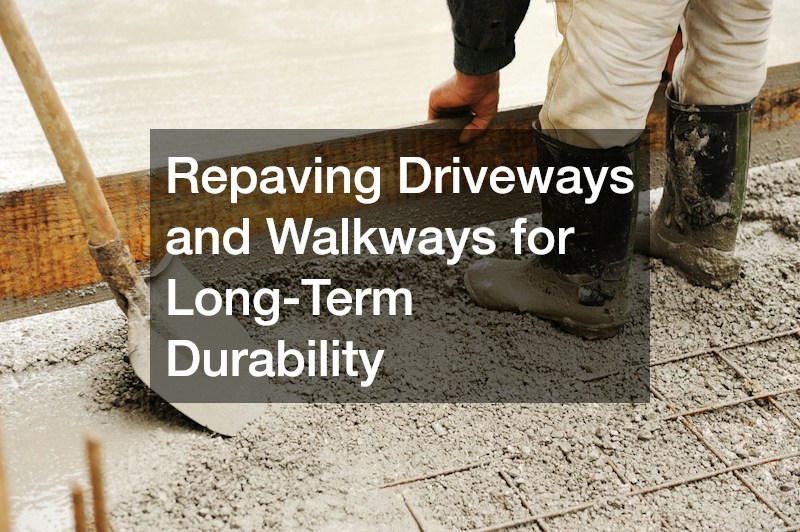
Exterior hardscaping often gets pushed to the bottom of renovation lists, but cracked or uneven surfaces only get worse and more expensive to fix the longer they are ignored. Investing in professional asphalt paving for your driveway or walkways early in your outdoor phase prevents water infiltration that can undermine your foundation or landscaping beds over time. A properly installed and sealed surface can last fifteen to twenty years with routine maintenance, making it one of the better long-term investments in a full overhaul.
Timing this work alongside other exterior projects, like fencing or lighting installation, also reduces the chance of damaging a freshly paved surface with heavy equipment later. Coordinating your contractors so paving happens after major digging is complete saves you from costly repairs or redos.
Defining Property Boundaries With New Fencing
Fencing serves both practical and aesthetic purposes, offering privacy, security, and a defined edge to your landscaping plans. Working with an experienced vinyl fence contractor gives you a low-maintenance option that resists rot, fading, and the repainting that wood fencing demands every few years. Vinyl has also become more affordable as manufacturing has improved, narrowing the price gap between it and traditional wood fencing.
Before installation begins, confirm your property lines and check local permitting requirements, since fence disputes with neighbors are a common and avoidable headache. Getting a written estimate that includes gate hardware and post spacing helps you compare quotes accurately across different companies.
Enhancing Curb Appeal With Exterior Lighting and Groundcover

Once your hardscaping and structures are in place, lighting and groundcover are what make a property feel finished and cared for. Adding landscape lighting along pathways, near entryways, and around key plantings extends the usable hours of your yard while improving safety on steps and walkways. A modest setup of six to ten path lights plus a couple of uplights for trees or architectural features is usually enough to transform a front yard without overwhelming the budget. LED fixtures have made this upgrade far more energy efficient than older halogen systems, often drawing under 5 watts per fixture, so the long-term operating cost is relatively low even when lights run on a timer every evening. Many kits now include low-voltage transformers and simple plug-and-play wiring, which means a homeowner comfortable with basic tools can install them without hiring an electrician. Groundcover deserves equal attention, since bare soil or patchy mulch undercuts even the best lighting design. Options like creeping thyme, clover, or shredded hardwood mulch fill in gaps between pavers and planting beds, suppress weeds, and retain soil moisture between waterings. Choosing a groundcover suited to your region’s sun exposure and foot traffic will save you from costly replanting down the road.
Groundcover maintenance matters too, particularly if you are managing large planting beds or need to spread mulch across a sizable yard. For properties with more than a few hundred square feet of beds, hand-spreading mulch can easily eat up an entire weekend and leave your back and shoulders paying the price for days afterward. Renting bark blowers for mulch application can save significant time and labor compared to spreading it by hand, especially on properties with extensive landscaping beds. A truck-mounted blower can distribute several cubic yards of mulch in the time it would take one person to hand-spread a single yard, and the even coverage often looks more polished than manual application. Many rental companies offer the equipment with an operator for a flat day rate, which can be more economical than purchasing bagged mulch and hiring separate labor. This is a detail many homeowners overlook until they are faced with pallets of bagged mulch and a sore back. Before booking a blower rental, measure your beds and calculate cubic yardage needed, since most services price by volume and minimum order size. It’s also worth asking whether the company can deliver bulk mulch in your choice of color or organic blend, since blown mulch applications typically work best with finer, shredded material rather than large nugget varieties.
Sealing the Envelope With Proper Insulation
An often-overlooked piece of a full property overhaul is the insulation hiding behind your walls, in your attic, and under your floors. Poor insulation undermines even the best HVAC upgrades, since conditioned air simply leaks out before it can do its job. Consulting with insulation companies during your planning phase helps identify weak points in your building envelope that might not be obvious from a casual walkthrough.
Upgrading insulation is also one of the more cost-effective improvements you can make relative to its impact on monthly utility bills. Many regions offer rebates or tax incentives for energy efficiency upgrades, so it is worth checking what is available before finalizing your budget for this phase.
A full property overhaul is a marathon, not a sprint, and the homeowners who stay on budget are the ones who plan thoroughly before signing a single contract. Break your project into phases, prioritize the systems that protect your home’s structure and safety, and treat cosmetic upgrades as the reward for getting the fundamentals right. Get multiple quotes, build in a contingency fund, and do not be afraid to ask contractors hard questions about timeline and cost. With a clear plan in hand, you can transform your entire property into something you are proud of without losing sleep over the final bill.