
A lush, vibrant lawn is the pride of any property, serving as an outdoor living room for gatherings, play, and relaxation. However, persistent standing water, spongy turf, and recurring mud pits can quickly turn your personal oasis into an unsightly, unusable swamp. Poor lawn drainage is far more than an aesthetic nuisance; prolonged saturation suffocates grass roots by depriving them of oxygen, breeds disease and insect pests, and can ultimately threaten the physical integrity of your walkways, patios, and home foundation.
Understanding why your property collects excess moisture is the essential first step toward reclaiming your yard. Factors such as compacted heavy clay soil, improper grading, natural high water tables, and uncontrolled roof runoff all play distinct roles in creating waterlogged conditions. Addressing these root causes requires a thoughtful combination of routine soil conditioning, structural landscape modifications, and targeted civil drainage solutions. This guide explores proven strategies to permanently rectify poor drainage, protect your property value, and restore a resilient, healthy landscape.

Aerating and Amending Compacted Soil Profiles
Healthy turf requires an intricate balance of minerals, organic materials, water, and pore space for gaseous exchange. Over time, recurring foot traffic, mower wheels, and natural settling compress soil particles together, eliminating the vital macro-pores that allow rainfall to percolate downward. When dense clay soils become heavily compacted, water cannot infiltrate the ground at the rate rainfall arrives, resulting in standing puddles that linger for days. Relieving this physical compaction through core aeration cuts deep soil plugs from your lawn, instantly creating vertical pathways for oxygen and moisture to move past the root layer.
Once core aeration is complete, topdressing your lawn with high-grade compost or coarse sand accelerates the transition toward a loamy, well-draining soil profile. Raking these amendments directly into the open core holes prevents the soil from re-compacting while introducing beneficial microbial life that decomposes dense thatch layers. For larger landscape redesigns, acquiring bulk gravel and soil conditioners from reputable providers of hardscaping supplies allows you to establish open-graded bedding layers beneath turf areas prone to chronic saturation. Consistent organic topdressing gradually restructures fine clay into granulated aggregates, permanently raising infiltration speeds across your lawn.
Managing and Diverting Heavy Downspout Discharge
The roof of a standard residential home sheds tens of thousands of gallons of concentrated stormwater each year. When gutter systems deposit this enormous volume directly adjacent to exterior walls or onto flat turf, severe saturated depressions inevitably develop. Uncontrolled downspout discharge saturates the topsoil within minutes, creating surface sheeting that strips away topsoil nutrients and drowns surrounding turf. Simple surface splash blocks are rarely sufficient during sustained downpours, making dedicated pipe routing an indispensable part of property water management.
Connecting your downspouts to smooth-walled PVC pipes buried underground allows you to direct roof runoff dozens of feet away toward safe, natural outlets. In flat yards lacking positive downhill pitch, partnering with certified French drain services ensures that downspout channels tie directly into broader subsurface routing networks without backing up during torrential rain. Buried downspout lines should always terminate at daylight using pop-up emitter valves or feed safely into specialized municipal drainage infrastructure. Clearing your gutters seasonally ensures leaves and twigs do not clog these subterranean diversion conduits, protecting your grass from unexpected overflow blowouts.
Reshaping Yard Topography with Swales and Berms
Water will always pursue the path of least resistance governed by gravity. If your lawn exhibits flat dead zones or inward slopes, surface runoff naturally converges into stagnant pools that damage grass blades and produce foul-smelling anaerobic conditions. Carving a gently sloped, grass-lined swale creates an intentional overland channel that steers sheet runoff away from your active yard areas and toward legal discharge zones. By contrasting these shallow depressions with subtle, compacted earth berms, you establish physical watershed divides that block runaway torrents from entering fragile lawn sectors.
Grading alone cannot always accommodate sharp changes in grade without destabilizing surrounding dirt banks. Integrating stepped terraces backed by functional retaining walls enables homeowners to sculpt severe slope angles into stable, horizontal tiers that manage hydraulic flow without triggering landslides. These structural barriers arrest rapid surface sheeting, forcing cascading water to slow down, settle, and filter through designated gravel backfill rather than carving muddy ravines across your lower lawn.
-
Survey the property boundaries to identify existing natural low points, high ridges, and neighboring runoff trajectories.
-
Establish a consistent downward slope of at least one inch for every ten feet of horizontal run away from primary structures.
-
Excavate swales with wide, parabolic cross-sections rather than sharp V-shapes to prevent severe lawn mower scalping.
-
Line high-velocity drainage channels with washed river rock or dense sod to prevent bare subsoil scouring.
-
Check local utility markings by contacting your regional dig-line service prior to excavating any berm or swale base.
With the general topography re-contoured to support positive overland drainage, sheet flows can move smoothly across the property without pooling in stagnant low zones. Proper slope management protects turfgrass crowns from suffocating beneath deep sheets of standing water while preventing localized erosion from scarring your yard.
Establishing Deep Subsurface Evacuation Routes
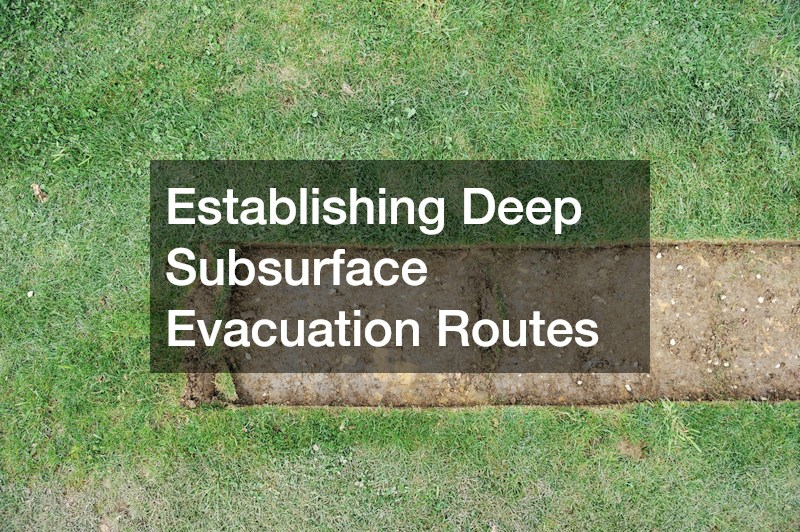
While re-grading resolves many surface issues, persistent high water tables and impermeable subterranean hardpans require subsurface intervention. When subsoil layers become completely saturated, moisture seeps upward through capillary action, turning the yard into a spongy bog long after rainfall has subsided. Traditional surface fixes cannot drain these deep water cushions; only perforated subterranean pipes placed at the base of excavated rock trenches can pull standing water away from turf root zones.
Excavating deep drainage trenches lined with non-woven geotextile fabric and washed drainage aggregate creates a continuous subterranean vacuum for trapped groundwater. Professional basement waterproofers routinely implement these exterior sub-surface evacuation networks because capturing deep perimeter saturation prevents subterranean water tables from migrating beneath adjoining indoor concrete slabs. The perforated pipe within the rock trench should always feature downward-facing perforations, allowing groundwater to rise smoothly into the pipe barrel and flow rapidly toward an open daylight exit or dedicated dry well.
Installing Active Mechanical Pumping for Trapped Basins
Certain properties reside in geological saucer basins or river valleys where surrounding elevations sit higher than the lawn itself. Under these circumstances, passive gravity-fed pipes have nowhere to discharge because there is no lower ground available on the parcel. Allowing water to sit indefinitely in these low basins leads to anaerobic soil conditions, fungal outbreaks, and total turf death. When gravity fails to provide an exit route, mechanical intervention becomes necessary to elevate and discharge captured groundwater off the property.
Installing an exterior catch basin coupled with an automatic, heavy-duty sump pump installation provides the pressure needed to pump trapped water through closed pipes to street-level storm drains. Outdoor pump systems must feature freeze-proof check valves, submersible solids-handling impellers, and weather-tight electrical feeds to withstand severe outdoor operational environments. These automated basins actively monitor water elevations below the lawn surface, engaging automatically during cloudbursts to clear subterranean water reservoirs before they reach the fragile turf crown.
Reinforcing Slopes and Terracing Runoff Pathways
Unstable inclines amplify drainage challenges by accelerating runoff velocities and stripping away fertile topsoil before plants can drink. Water racing down unprotected hillsides creates deep gullies that dump heavy silt, mud, and debris across your lower lawn surfaces. Over time, saturated hillsides experience increased lateral earth pressures that can prompt catastrophic slope shearing, taking mature trees and turf down with them. Structuring steep grades into manageable steps minimizes hydraulic speed and encourages localized water infiltration.
Mitigating severe slope failure while resolving massive volume flow demands detailed civil and structural engineering calculations to ensure that stepped tiers resist immense hydrostatic forces. Engineered terracing projects integrate geogrid soil reinforcement fabrics, crushed stone drainage chimneys, and continuous collector pipes behind each level. Properly engineered terraces convert aggressive, erosion-causing runoffs into regulated vertical cascades, preserving lower turf flatlands from continuous mud inundation and severe water damage.
-
Calculating localized soil cohesion, friction angles, and anticipated rainfall volumes across the entire slope face.
-
Excavating tiered shelf foundations beneath regional frost lines to prevent winter heave and wall displacement.
-
Installing continuous aggregate chimneys wrapped in filter cloth directly behind every retention face.
-
Fitting perforated lateral collection pipes with daylight outlets to relieve hydrostatic buildup behind the walls.
-
Compacting structural backfill in six-inch lifts to prevent progressive settling and dangerous soil shifting.
Once these tiers are locked in place, the hillside changes from an erosion hazard into a tiered, functional landscape asset. Water descending the incline is intercepted at every level, protecting your primary lawn from uncontrolled mudflows and water pooling.

Permeable Paving and Porous Hardscape Conversions
Expansive impervious surfaces—such as concrete patios, wide asphalt driveways, and solid walkways—severely worsen lawn drainage issues. During storms, these non-porous planes shed 100% of the rainfall striking them, dumping thousands of gallons directly onto the borders of adjoining grass. When a tiny lawn border is forced to absorb runoff from an expansive driveway, severe rutting, puddling, and turf die-off inevitably follow. Replacing conventional concrete slabs with open-graded permeable surfaces dramatically cuts runoff volumes at the source.
Consulting with licensed hardscape companies allows homeowners to transition obsolete concrete pads into elegant, fully permeable interlocking paver installations. These specialized systems feature widened paver joints filled with fine crushed granite over an open-graded aggregate reservoir, eliminating impermeable sand or cement mortar. Rain passes straight through the patio surface into the gravel base below, storing the moisture underground where it slowly recharges regional aquifers without flooding your lawn.
Fortifying Foundation Perimeters Against Hydrostatic Pressure
When poor lawn grading slopes water back toward structural walls, moisture builds up against the exterior foundation footprint. This standing moisture exerts massive hydrostatic pressure, forcing water through hairline concrete fissures, brick ties, and cold joints. Beyond causing damp crawlspaces and flooded basements, this persistent moisture pool creates an unworkable swamp zone along the home perimeter where turf and ornamentals cannot survive. Directing runoff away from the foundation line is essential for both your building’s health and your lawn’s perimeter condition.
Engaging an experienced basement waterproofing service provides the exterior trenching, foundation damp-proofing coatings, and footing drainage infrastructure needed to stop lateral water intrusion. Modern exterior remediation involves excavating foundation perimeters down to the footings, applying elastomeric waterproofing membranes, and covering them with heavy-duty dimpled drainage boards. This protective envelope guides descending water immediately down to footing collection pipes, shielding the home from foundation cracking and keeping foundation-adjacent turfbeds dry and stable.
Upgrading Garden Borders and Raised Bed Planters
Perimeter garden beds are often edged with flimsy plastic strips, rotting landscape timbers, or unmortared landscape stones that shift out of alignment over time. When severe storms arrive, loose garden soils, bark mulches, and fertilizer runoffs wash out of poorly contained beds directly onto turf margins. This floating organic debris smothers lawn grasses, clogs delicate soil pores, and leaves thick layers of silt that trap moisture along the lawn edge. Sturdy, well-built stone borders prevent this overflow while doubling as diversion curbing for surface water.
Professional masonry companies excel at constructing robust, mortared stone retaining curbs that act as durable barriers against topsoil erosion and mulch migration. Integrating skilled brick masonry services into your overall landscape design produces raised garden walls and stone gutter swales that channel heavy roof and planter overflows directly to collection basins. Solid, mortared brick or natural cut stone borders add timeless visual elegance to landscape boundaries while permanently stopping soil contamination from damaging your turf.

Cultivating Rain Gardens and Moisture-Tolerant Native Plantings
Engineering solutions can be beautifully complemented by nature-based biological drainage methods. Rain gardens are shallow, specially excavated landscape depressions backfilled with a high-permeability mix of sand, compost, and topsoil, specifically planted with deep-rooted native vegetation. Positioned to catch stormwater runoff from roofs, driveways, and swales, a rain garden temporarily collects standing water, filtering it safely into the subsoil within twenty-four to forty-eight hours without providing a breeding habitat for mosquitoes.
Native wetland and riparian plants boast robust, fibrous root architectures that delve deep into compacted clays, creating living biopores that dramatically boost natural soil drainage. Species such as Blue Flag Iris, Red Osier Dogwood, Switchgrass, and various native sedges thrive in alternating conditions of brief inundation and summer dry spells. Over time, these native root systems expand continually, drawing down large volumes of ground moisture through natural transpiration and restoring healthy biological balance across your entire property.
A dry, well-drained lawn provides a stable foundation for outdoor activities, protects your structural investments, and cultivates lush, resilient turf for years to come. Resolving chronic lawn drainage problems requires shifting from temporary surface fixes toward a complete, watershed-based approach. By diagnosing whether your property’s waterlogging stems from surface soil compaction, poor grading, concentrated downspout volumes, or subterranean water tables, you can implement targeted physical and biological remedies that tackle the root cause. Combining soil aeration, topographical contouring, modern subsurface piping, and permeable hardscapes will permanently alleviate water retention across your yard.