When you look up at a towering oak or a high pine leaning precariously over a roof, scaling it might seem like a feat reserved for stunt performers or extreme athletes. Yet for certified arborists and tree care experts, climbing high into the canopy is an everyday task required for pruning, hazard mitigation, and complete tree removal. Tree climbing involves significant risk, demanding specialized knowledge, rigorous safety procedures, and reliable equipment to prevent falls and injuries. Whether performing routine maintenance or managing storm damage, hiring a professional tree service in Annapolis, MD ensures that complex canopy work is executed safely, efficiently, and in strict compliance with industry standards.
Pre-Climb Inspection and Site Assessment
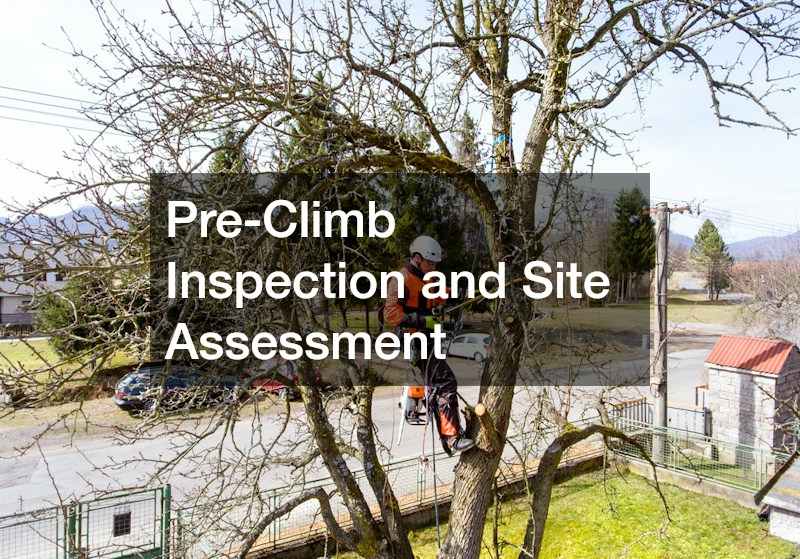
Before a single foot leaves the ground, professional climbers conduct a meticulous site and structural evaluation. Safely scaling a tree begins long before any gear is attached. Arborists perform a thorough visual inspection from the root flare all the way up to the highest crown branches to check for signs of decay, hollow trunks, root rot, fungal growth, or insect infestations that could compromise the tree’s strength. They also scan the area for nearby electrical power lines, structures, or unstable dead branches that could shift during the climb.
Finally, the climber locates a robust, healthy union or branch fork capable of supporting thousands of pounds of force to set the primary climbing line. For property owners seeking a trusted tree service in Annapolis, MD, this preliminary risk assessment is a critical phase that protects both the crew and the surrounding property from unexpected hazards.
Beyond assessing the tree itself, professionals also perform a systematic evaluation of the surrounding drop zones and environmental conditions. Wind speeds, ambient humidity, and incoming weather patterns are carefully monitored, as even moderate gusts can dramatically increase force loads on high branches and make footing slick. Ground crews clear the immediate radius of debris, vehicles, and lawn features while establishing secure perimeter barriers to prevent bystanders from entering the work site. The climbing team formulates a detailed emergency action plan that designates ground support roles, verifies line-of-sight communication protocols, and establishes high-angle rescue procedures in the event an aerial emergency arises.
Specialized Equipment and Personal Protective Equipment
Climbing a tree safely requires equipment specifically engineered for arboriculture, which differs substantially from standard rock-climbing gear. Tree service crews rely on heavy-duty tools designed for high-abrasion environments and dynamic movement. Arborist harnesses feature wide leg loops and back support for comfort during long hours suspended in the air, along with multiple attachment points for safety lanyards. The ropes themselves consist of high-tensile kernmantle or braided materials, paired with steel-core work-positioning lanyards that resist accidental cuts from saws. Friction savers and ascenders reduce rope wear against tree bark while allowing smooth movement along the line.
To complete the gear array, every climber wears personal protective equipment, including safety helmets with chin straps, eye and ear protection, chainsaw-resistant chaps, and heavy-duty non-slip boots. By combining top-tier equipment with strict maintenance schedules, a qualified tree service in Annapolis, MD guarantees that every climb is backed by redundant safety systems.
Proven Ascent Techniques and Positioning Systems
Modern arborists use precise climbing techniques tailored to the structure of the tree and the specific task at hand. The two main system configurations used across the industry are the Moving Rope System and the Stationary Rope System. In a Moving Rope System, the rope runs over an anchor point in the tree and back down to the climber, traveling over the anchor point while friction hitches or mechanical devices control the ascent and descent.
In contrast, a Stationary Rope System uses a line anchored securely at the base or a top fork, allowing the arborist to ascend using mechanical ascenders while the rope remains completely static, which offers smooth climbing on taller trees and reduces friction on the bark. Throughout the job, climbers maintain a practice known as complete tie-off, ensuring they are secured by at least one anchor line, and frequently two when operating cutting equipment, so they remain fully tethered at all times.
Scaling massive trees is a discipline that blends physical agility, scientific knowledge, and unwavering adherence to safety protocols. From initial ground-level site inspections to advanced rope techniques, professional arborists take every precaution to navigate high canopies without risking life or property. Attempting to climb or trim large trees without professional training and proper equipment can lead to severe injury or costly structural damage. Relying on an experienced, fully insured tree service in Annapolis, MD provides total peace of mind, knowing that your trees are being serviced with the highest standards of safety and care.